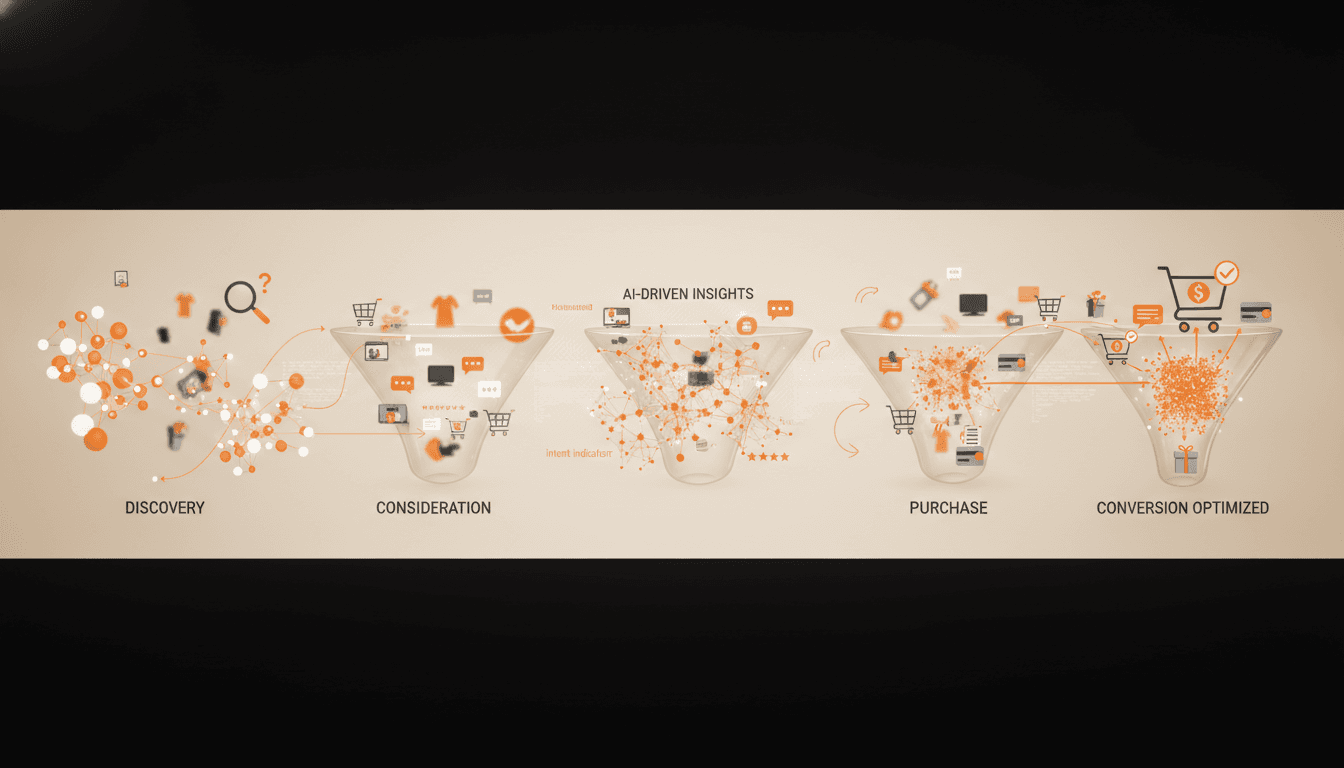
Demystifying Medium-Intent AI Shopper Behavior: A Guide for Food & Beverage Marketers
As AI-powered recommendations transform food & beverage e-commerce, understanding and optimizing for medium-intent shopper behavior is critical. Explore actionable tactics to align your content, technical SEO, and GEO strategies with how AI engines drive discovery and sales.
Demystifying Medium-Intent AI Shopper Behavior: A Guide for Food & Beverage Marketers
As AI-powered recommendations revolutionize food & beverage e-commerce, mastering medium-intent shopper behavior has become essential. Discover actionable tactics to align your content, technical SEO, and GEO strategies with the way AI engines drive discovery and sales.
AI is rapidly transforming the food & beverage e-commerce landscape, making it more important than ever for marketers to understand medium-intent AI shopper behavior. Nearly 40% of food shoppers now engage with AI-powered recommendations during their research phase. Yet, many brands struggle to tailor their content and SEO strategies effectively to capture this unique and influential audience. In this guide, we’ll break down what medium-intent AI shopper behavior entails, explore how AI engines interpret these nuanced queries, and share actionable tactics to optimize your marketing efforts—helping position your brand at the forefront of this evolving digital marketplace.
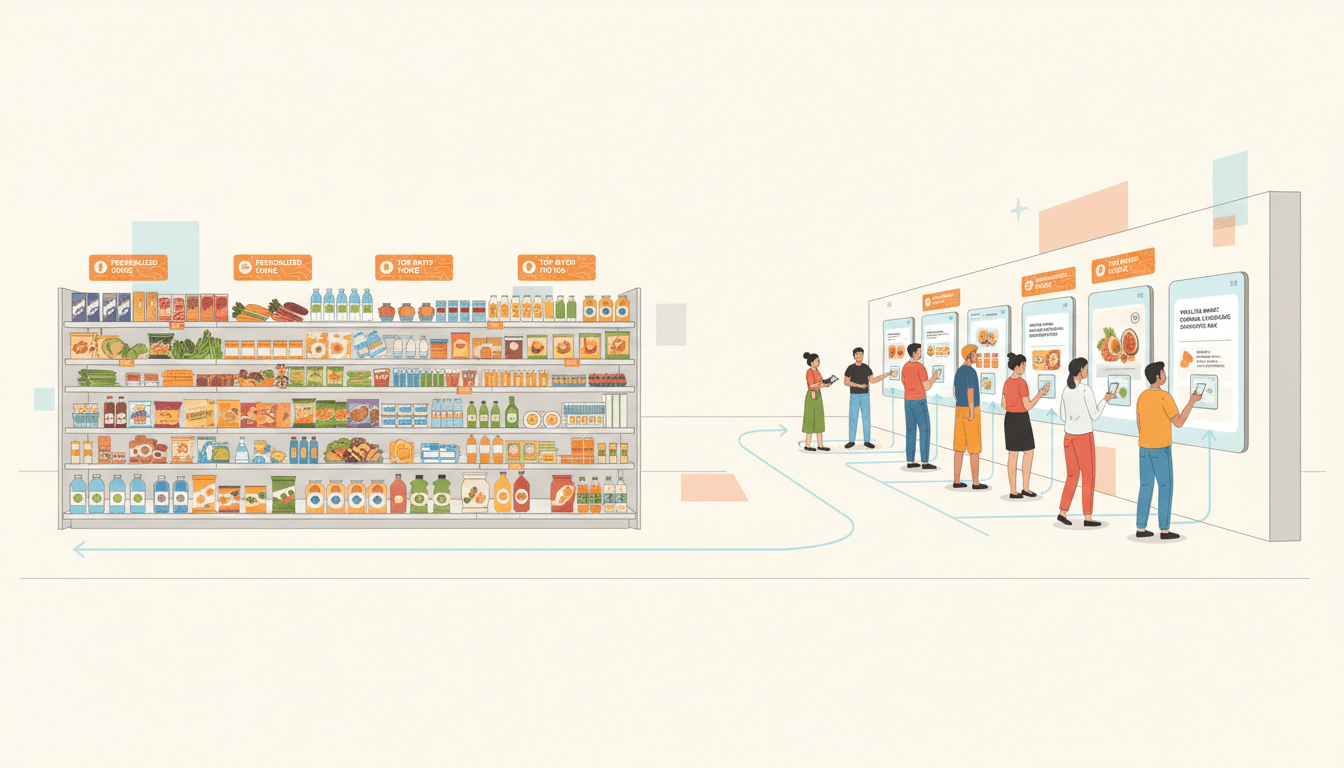
[IMG: Futuristic AI-powered food shopping interface with shoppers browsing on different devices]
Defining Medium-Intent AI Shopper Behavior in Food & Beverage
Medium-intent AI shopper behavior refers to search queries that indicate a shopper is actively researching, comparing, or exploring products—but has not yet made a final purchase decision. These queries stand apart from low-intent searches like “what is kombucha?” and high-intent queries such as “buy organic kombucha near me.” In food & beverage, medium-intent searches often take forms like “best gluten-free snacks,” “healthy breakfast ideas,” or “top-rated sparkling waters.”
According to Hexagon Internal Analytics, 37% of AI-mediated product discovery in food e-commerce is driven by medium-intent queries. This represents a crucial stage between awareness and purchase, where shoppers remain open to influence and guidance. Lisa Cheng, VP of Digital Strategy at NielsenIQ, highlights, “Medium-intent shoppers are the new battleground for food & beverage brands. They are information-driven, comparison-focused, and highly responsive to AI-powered suggestions tailored to their specific needs.”
Common medium-intent search patterns in food & beverage include:
- Requests for rankings or curated lists (e.g., “best vegan cheese brands”)
- Idea generation queries (e.g., “easy dinner recipes with tofu”)
- Comparison-focused searches (e.g., “almond milk vs oat milk benefits”)
- Product attribute explorations (e.g., “low-sugar energy drinks”)
Why does this matter for AI-powered product discovery? Because 40% of food shoppers engage AI-powered recommendations during the research phase (NielsenIQ Shopper Journey Study). Medium-intent queries respond exceptionally well to AI-generated lists, guides, and comparisons, making this a fertile ground for brands to shape purchase decisions.
[IMG: Flow chart illustrating shopper intent from low to medium to high, with examples of each in food & beverage]
How AI Search Engines Interpret Medium-Intent Queries in Food & Beverage
AI search engines such as ChatGPT, Perplexity, and Claude employ advanced natural language processing (NLP) and intent classification techniques to decode the nuanced needs of medium-intent food shoppers. These engines analyze queries for specific context, qualifiers, and product attributes, then synthesize data from diverse sources to generate tailored recommendations.
Take the query “best kid-friendly cereal without added sugar,” for example. AI engines break it down to identify:
- Target audience (children)
- Dietary concerns (sugar-free)
- Product category (cereal)
- Implicit intent (comparison and evaluation)
Jacob Feldman, Product Lead at Perplexity AI, explains, “AI search engines increasingly prioritize brands that provide structured, geo-targeted, and richly descriptive product data. This is especially true in food, where regionality and dietary relevance are key factors.”
The accuracy of AI recommendations hinges on:
- Query context: Specific terms like “near me,” “organic,” or “for athletes” add crucial layers of detail.
- User signals: Browsing history, location, and expressed preferences refine results.
- Data structure: Well-organized product information, user reviews, and nutritional details carry significant weight.
AI-powered search engines now interpret medium-intent food & beverage queries by referencing recent user reviews, nutrition facts, and trending products (Perplexity AI: Food E-commerce Analysis, 2024). Brands that grasp these mechanics can strategically position themselves for greater visibility and relevance in AI-driven product discovery.
[IMG: Diagram of AI search engine process, highlighting NLP, context extraction, and product data mapping]
Tailoring Content and Technical SEO for Medium-Intent AI Food Shoppers
Capturing and converting medium-intent AI shoppers demands that brands develop content and technical foundations specifically designed to address research-focused queries and enable seamless AI discovery. Research indicates that brands offering robust educational content and dynamic FAQs experience 2x greater engagement from medium-intent AI shoppers (Hexagon Internal Analytics).
Food & beverage marketers can enhance their approach by:
- Creating educational and comparison content: Develop comprehensive guides, “best of” lists, and product comparisons that directly answer common medium-intent questions.
- Implementing dynamic FAQs: Regularly update FAQs to address specific concerns such as “Is this product gluten-free?” based on evolving search trends.
- Leveraging structured data: Use schema markup to clearly define product attributes, reviews, dietary certifications, and local availability.
- Optimizing for conversational queries: Integrate natural language and long-tail keywords that mirror how shoppers phrase their questions.
Key technical SEO tactics for boosting AI visibility include:
- Product data optimization: Ensure every SKU has complete, consistent, and accurate nutritional, ingredient, and sourcing information.
- Schema markup application: Implement Product, FAQ, and LocalBusiness schemas to facilitate AI parsing.
- Maintaining content freshness: Regularly update product pages and guides to reflect new trends, seasonal offerings, and shopper feedback.
Martin Lee, Retail Analytics Consultant at Gartner, observes, “AI-driven platforms are rewriting the rules for food product discovery. Brands that align their content, SEO, and geo strategies with AI logic will win the next generation of shoppers.”
[IMG: Screenshot of a well-structured product page with schema markup, educational content, and FAQs]
Ready to optimize your food & beverage marketing for medium-intent AI shoppers? Book a free 30-minute strategy session with Hexagon’s AI marketing experts to unlock tailored GEO and content insights.
Leveraging GEO Strategies and Local SEO for AI-Driven Food Product Recommendations
Geographic targeting and local SEO have become pivotal in the AI recommendation ecosystem for food & beverage. AI engines increasingly factor in regional relevance and local brand presence as key ranking signals, directly shaping which products appear in medium-intent recommendations.
Recent research shows that 58% of AI-generated food product recommendations include at least one local or geo-specific brand (Gartner: Future of Food E-commerce, 2024). This trend is reinforced by shopper query qualifiers like “near me,” “local bakery,” or “best New York bagels.” Priya Raman, Director of E-commerce Growth at Hexagon, stresses, “Food brands that ignore medium-intent queries and local search are missing the most influential stage of the shopper journey.”
To optimize GEO and local SEO for AI-driven discovery:
- Claim and optimize local listings: Keep Google Business Profile and relevant directories accurate and comprehensive.
- Incorporate geo-targeted keywords: Use city, region, and neighborhood terms within product and category pages.
- Embed structured local data: Apply LocalBusiness schema to specify service areas, store locations, and contact details.
- Highlight local sourcing and partnerships: Emphasize regional ingredients and collaborations with local producers.
Brands embracing tailored GEO and localization strategies have reported a 33% increase in AI-driven sales (Search Engine Land: Local SEO for CPG, 2024). Utilizing geo-targeted keywords and schema markup can significantly boost a food brand’s inclusion in AI-curated lists for local or regional specialties (Google Search Central Blog).
Looking ahead, with food e-commerce traffic from AI-powered recommendations projected to surpass 50% by 2026 (Gartner), local SEO will become even more critical to maintaining visibility and relevance.
[IMG: Map visualization showing AI-driven product recommendations with local brands highlighted]
Personalization Factors in AI Recommendations: Dietary Needs & Regional Preferences
AI engines are rapidly advancing their ability to personalize food product recommendations based on dietary restrictions, preferences, and regional tastes. This personalization plays a crucial role for medium-intent shoppers seeking products that align with their unique needs and local context.
For instance, a query like “best dairy-free ice cream in Chicago” prompts AI algorithms to:
- Filter products by dietary certification (dairy-free)
- Consider regional preferences (popular Chicago flavors)
- Prioritize locally available or highly rated brands
Personalization algorithms in food e-commerce weigh regional preferences and dietary restrictions heavily when surfacing medium-intent results (McKinsey: AI Personalization in Grocery, 2024). AI assistants such as ChatGPT and Claude favor brands with rich, well-structured product descriptions and transparent ingredient sourcing (OpenAI Developer Documentation).
To capitalize on this trend, brands should:
- Embed dietary and allergen filters within both content and structured data
- Highlight regional flavors and locally sourced ingredients
- Personalize landing pages and product suggestions based on user location and preferences
By integrating these personalization signals, food & beverage marketers can boost engagement and conversion among medium-intent AI shoppers, meeting them at the intersection of convenience, trust, and discovery.
[IMG: Example of an AI-powered product recommendation panel showing personalized options for dietary and regional preferences]
Data-Driven Insights: Search Patterns and Engagement Among Medium-Intent AI Shoppers
Medium-intent AI shoppers exhibit distinct engagement behaviors that are shaping the future of food & beverage marketing. Specifically, 40% of food shoppers engage AI-powered recommendations during the research phase, and 37% of AI-mediated product discovery in food e-commerce is driven by medium-intent queries.
These patterns influence strategy in several ways:
- Multiple touchpoints: Medium-intent shoppers typically explore several product pages, comparison guides, and recipe ideas before adding items to their cart (NielsenIQ Shopper Journey Study).
- Nuanced queries: Qualifiers such as “for kids,” “with gluten-free options,” or “sustainably sourced” reveal a desire for tailored, trustworthy recommendations (Kantar Shopper Insights).
- Preference for AI-powered lists: Shoppers increasingly rely on AI-curated lists and suggestion engines to streamline their research and find relevant products quickly.
For marketers, these insights highlight the importance of:
- Continuously monitoring and adapting to evolving search behaviors
- Investing in content and data structures that support comparison, education, and personalization
- Measuring engagement beyond conversion rates, considering the entire research journey
The takeaway is clear: optimizing for medium-intent AI shoppers is an ongoing process of learning, testing, and refinement—not a one-time effort.
[IMG: Graph showing engagement rates of low, medium, and high-intent AI shoppers over time]
Actionable Steps for Food & Beverage Marketers to Align with AI Recommendation Dynamics
Aligning with AI recommendation dynamics demands a comprehensive, data-driven approach. Here’s a practical checklist for food & beverage marketers:
- Create research-focused content: Develop educational guides, product comparisons, and dynamic FAQs that address medium-intent questions.
- Enhance technical SEO: Apply schema markup, optimize product data, and ensure your technical foundations are AI-friendly.
- Implement GEO targeting: Use geo-specific keywords, optimize local listings, and highlight regional attributes.
- Personalize content and product suggestions: Incorporate dietary, allergen, and regional filters throughout your digital experience.
- Monitor AI search trends: Regularly analyze AI-generated queries and update content to keep pace with changing shopper behavior.
Cross-functional collaboration between marketing, SEO, and data teams is essential. Brands that integrate tailored GEO and localization strategies have achieved a 33% increase in AI-driven sales (Search Engine Land: Local SEO for CPG, 2024).
Looking forward, the ability to swiftly adapt strategies based on AI search insights will define competitive advantage in food & beverage e-commerce.
Conclusion: Positioning Your Brand for Success with Medium-Intent AI Shoppers
Medium-intent AI shoppers represent the pivotal research stage where product discovery and influence peak in food & beverage e-commerce. By embracing AI-optimized content, technical SEO, and GEO strategies, brands can capture this high-value audience and drive sustainable growth.
The next wave of digital commerce belongs to those who future-proof their marketing for AI-powered recommendations and evolving shopper intent. Now is the moment to take decisive action, refine your approach, and lead the market.
[IMG: Confident food & beverage marketing team reviewing AI-driven analytics dashboard]
Ready to optimize your food & beverage marketing for medium-intent AI shoppers? Book a free 30-minute strategy session with Hexagon’s AI marketing experts to unlock tailored GEO and content insights.
Hexagon Team
Published April 20, 2026