brandgooglesearch
From Traditional SEO to AI Search: Why Keyword Density and Backlinks No Longer Drive Brand Discovery
Your brand ranks #1 on Google—but when customers ask ChatGPT for a recommendation, you're invisible. Discover why the two-decade SEO playbook is broken for AI-era brand discovery, and what Generative Engine Optimization (GEO) means for your growth strategy.
16 min read

---


# From Traditional SEO to AI Search: Why Keyword Density and Backlinks No Longer Drive Brand Discovery

*A brand ranks #1 on Google—but when customers ask ChatGPT for a recommendation, that brand is invisible. This analysis explores why the two-decade SEO playbook is broken for AI-era brand discovery, and what Generative Engine Optimization (GEO) means for growth strategy.*

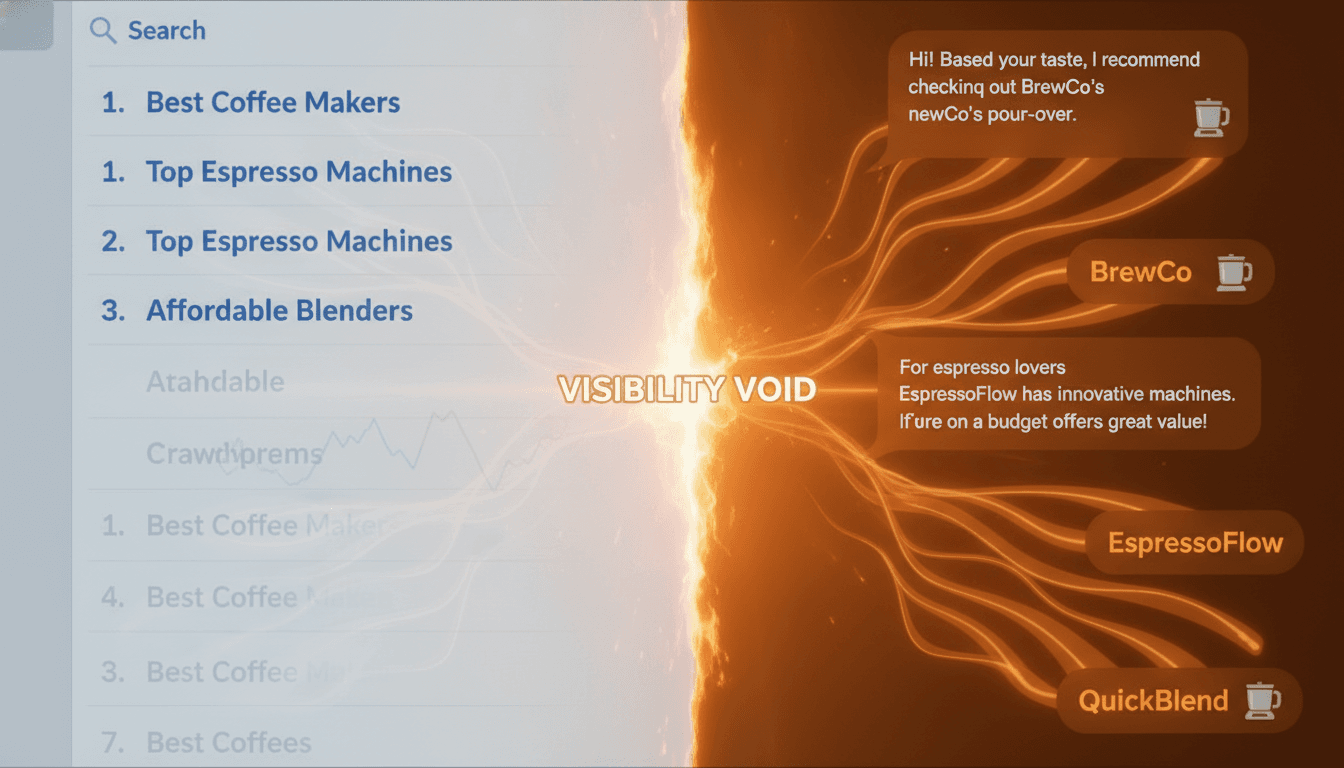
[IMG: Split-screen visualization showing a brand ranking #1 on Google search results on the left, and the same brand absent from a ChatGPT product recommendation response on the right, with a stark visual gap between them]


---


## The Invisible Brand: Why Google Rankings No Longer Guarantee Discovery

A brand ranks #1 on Google for its most important keyword. Domain Authority is strong. The backlink profile is impressive. Yet when a potential customer asks ChatGPT, Perplexity, or Claude for a product recommendation in that category, the brand's name doesn't appear.

This isn't a coincidence. It's evidence of a fundamental shift in how consumers discover brands—and it's costing e-commerce companies millions in missed revenue.

According to [Hexagon's AI Brand Visibility Study of 500+ e-commerce brands](https://joinhexagon.com), **68% of brands ranking in Google's top 3 positions are completely absent from equivalent AI assistant recommendations**. This isn't a minor ranking fluctuation or a temporary anomaly. It's a strategic blind spot that reveals something far more significant: the SEO playbook that dominated the last two decades operates on entirely different rules than AI search.

Google and AI assistants are not competing variants of the same channel. They are fundamentally different distribution systems, each with its own ranking signals, its own content requirements, and its own audience expectations. A brand can execute a technically flawless Google optimization strategy and still be invisible to the AI assistants that millions of consumers now consult before making purchase decisions.

The critical question isn't whether SEO is working. It's whether brands have recognized AI search as an entirely separate distribution channel that plays by completely different rules.


---


## The SEO Success Paradox: Why Traditional Signals Don't Translate to AI

The disconnect between Google rankings and AI visibility reveals a deeper truth: traditional SEO metrics simply do not predict AI citation frequency. Domain Authority, keyword rankings, backlink counts—these are all optimized for Google's crawl-based algorithm. But they tell brands almost nothing about whether an AI system will trust, cite, or recommend them.

The two channels are measuring different things, rewarding different behaviors, and drawing from different sources. [According to BrightEdge's AI Search Impact Report Q3 2024](https://www.brightedge.com), **41% of Google search queries now trigger an AI Overview**, yet the top organic SEO result appears in that AI Overview citation only **18% of the time**. A brand can own position one and still be bypassed entirely by the AI layer sitting above it.

Consumer behavior is accelerating this shift dramatically. **58.5% of Americans used AI or voice-powered search to find product information in 2024, up from just 27% in 2020**, according to the [Edison Research & NPR Smart Audio Report 2024](https://www.edisonresearch.com). That's not a gradual transition. It's a wholesale redistribution of discovery traffic happening in real time—and brands treating AI search as a future concern rather than a present reality are already falling behind.


---


## How Google Built Its Empire: The PageRank Era and Its Limitations

Google's dominance rested on a deceptively elegant insight: a webpage that many other pages link to is probably more valuable than one that nobody links to. This PageRank algorithm treated backlinks as votes of confidence, creating a measurable proxy for authority that could be computed at scale. For over two decades, this model defined how brands competed for visibility online.

Keyword density emerged alongside PageRank as a second foundational pillar. By repeating target keywords at specific frequencies within content, brands could signal topical relevance to Google's crawlers. This approach drove entire content production workflows built around keyword-to-word-count ratios rather than genuine informational value.

Google's algorithm has evolved considerably—incorporating hundreds of additional signals—but its infrastructure still relies fundamentally on link graphs and crawl data. [As Google Search Central documentation confirms](https://developers.google.com/search/docs), these technical signals remain central to how Google evaluates and ranks content. The system was engineered for algorithmic pattern-matching, not for the kind of semantic comprehension that large language models perform.

This distinction matters enormously. Google's algorithm asks: "How many authoritative pages link to this content?" Large language models ask: "How useful, accurate, and trustworthy is this source?" These are not variations of the same question. They are fundamentally different inquiries that lead to fundamentally different answers.


---


## Why Traditional SEO Tactics Fail in AI Search Engines

The failure manifests clearly in the data. A brand invests heavily in backlink acquisition and keyword optimization, achieves strong Google rankings, and then watches those investments generate zero lift in AI assistant citation frequency. This isn't a measurement problem. It's structural.

[A 2024 analysis of 1,200 brand queries by Moz and Rand Fishkin](https://moz.com) found **zero measured correlation between a website's Moz Domain Authority score and its frequency of citation by ChatGPT-4** in product recommendation queries. The backlink profile that drives Google rankings has essentially no predictive value for AI recommendation visibility. The link graph that Google built its empire on is simply not part of how large language models evaluate sources.

Keyword density fares no better. [Stanford HAI research on generative search behavior](https://hai.stanford.edu) confirms that keyword density optimization has **zero measurable effect on AI citation frequency**. Large language models parse semantic meaning and contextual relevance, not keyword repetition. In fact, keyword-stuffed content often actively degrades the clarity and coherence that AI systems reward—making over-optimized pages less likely to be cited, not more.

As Rand Fishkin, Co-founder of SparkToro and founder of Moz, explains: *"The rules of search are being rewritten in real time. Backlinks were the currency of the old web—a vote of confidence from one page to another. But large language models don't read hyperlinks. They read meaning, context, and credibility. A brand with 10,000 backlinks but vague, unstructured content will be invisible to AI, while a brand with 50 authoritative, well-cited articles answering real questions will get recommended constantly."*

[According to Ahrefs' State of AI Search Study 2024](https://ahrefs.com), traditional link-building campaigns show **near-zero direct impact** on whether AI assistants mention a brand. LLMs are trained on content quality and citation patterns, not hyperlink graphs. Every dollar spent on backlink acquisition for AI visibility purposes is a dollar generating no return in that channel.

Understanding this is the first step toward building a strategy that actually works.


---


## The AI Search Ranking Difference: What Signals Actually Matter

If backlinks and keyword density don't drive AI citation, what does? The answer lies in how large language models were built and what they were trained to value. AI systems evaluate content through **semantic comprehension**—understanding what a piece of content actually means, how accurately it answers a question, and how credible the source appears based on its training data.

This is fundamentally different from Google's approach of analyzing link patterns and keyword distribution. Source trustworthiness is a primary evaluation metric, but trustworthiness is determined very differently than in Google's model. [Princeton NLP research on LLM citation patterns](https://nlp.cs.princeton.edu) shows that AI models were trained on editorial citation patterns—the way academic papers, journalism, and expert publications reference authoritative sources—rather than on hyperlink authority graphs.

A brand mentioned approvingly in a respected industry publication carries far more weight in AI training data than a brand with thousands of low-quality backlinks. [According to SparkToro's AI Citation Source Analysis 2024](https://sparktoro.com), AI systems disproportionately cite Reddit, Quora, industry review platforms, and editorial publications. These are channels built on community expertise and editorial judgment, not on link-building campaigns.

A product that earns consistent five-star reviews with detailed written feedback on multiple platforms is far more likely to surface in AI recommendations than a product with strong Google rankings but minimal third-party commentary. Amanda Natividad, VP Marketing at SparkToro, frames the strategic shift clearly: *"The question marketers need to stop asking is 'how do I rank on page one?' and start asking 'how does an AI decide whether to trust and cite my brand?' Those are completely different questions with completely different answers."*


---


## Introducing Generative Engine Optimization: The New Framework

Generative Engine Optimization is the emerging discipline built to answer exactly that question. [Princeton University researchers Aggarwal et al. (2023)](https://arxiv.org/abs/2311.09735) define GEO as a framework focused on making brand content **legible, citable, and trustworthy to AI systems**—a fundamentally different objective than traditional SEO's goal of signaling relevance to a crawl-based algorithm.

GEO is not SEO with a new name. It's a fundamentally different discipline. SEO was about signaling to an algorithm. GEO is about being genuinely useful to a model that is trying to answer a human's question accurately.

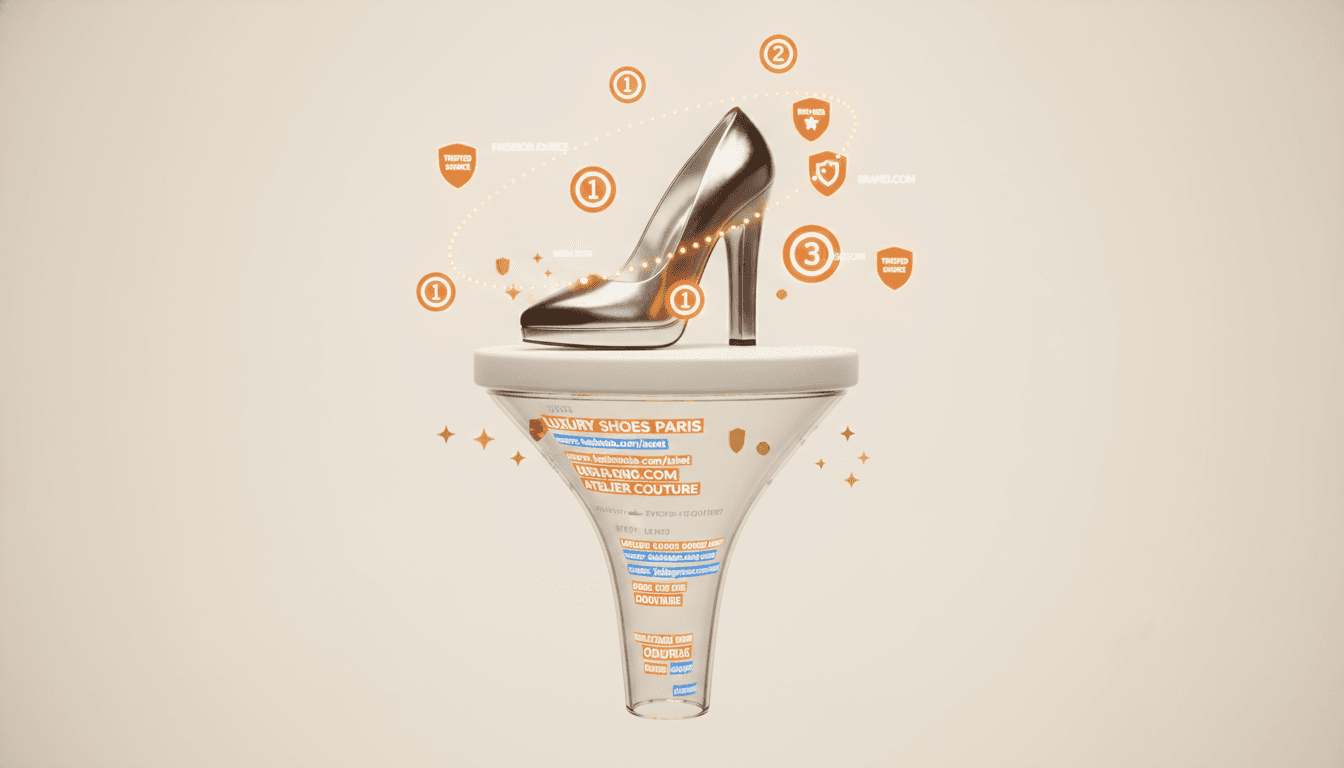
GEO rests on four core pillars: structured data markup (Schema.org), topical authority, brand entity consistency, and authoritative editorial citations. Each pillar addresses a specific dimension of how AI systems evaluate and select sources during response generation. Together, they represent a comprehensive strategy for earning AI citation frequency rather than gaming algorithmic ranking signals.

As Princeton researcher Priya Aggarwal explains: *"The brands that win in AI search are those that have become the most trustworthy, comprehensive sources on their topic—not those that gamed a ranking system."* Critically, GEO should be treated as a **separate, complementary strategy** to SEO—not a replacement. Both channels matter. But they require different investments, different content approaches, and different success metrics.

[According to a 2024 comparative study by Semrush and Search Engine Journal](https://www.semrush.com), brands investing in GEO signals see **3x more AI-driven referral traffic** than those spending equivalent budgets on backlink-building campaigns.


---


## The Four Pillars of GEO: Building AI Visibility

[IMG: Four-pillar infographic showing the GEO framework with icons for Structured Data, Topical Authority, Entity Consistency, and Editorial Citations, each with a brief descriptor and connection to AI citation outcomes]

**Pillar 1: Structured Data Markup (Schema.org)**

AI systems rely on structured, machine-readable product information to accurately represent brands in recommendations. Implementing Schema.org markup for products, reviews, FAQs, and organization data transforms content from human-readable text into information that AI systems can parse, verify, and cite with confidence. [Google Merchant Center and Schema.org implementation studies](https://schema.org) confirm that e-commerce brands with robust structured data are significantly more likely to have their products surfaced in AI-generated shopping recommendations. This isn't optional. It's foundational.

**Pillar 2: Topical Authority and Content Depth**

LLMs reward comprehensive, in-depth topical coverage over keyword-optimized surface-level content. [Semrush's Topical Authority & AI Visibility Research 2024](https://www.semrush.com) identifies topical authority as the closest analog between traditional SEO and GEO—but GEO extends it further, requiring machine-readable formatting and cross-platform consistency. Brands must become the most accurate, well-structured source on their specific category to earn consistent AI citation.

This means going deeper, not broader. It means answering the questions customers actually ask, in the format AI systems can actually use.

**Pillar 3: Brand Entity Consistency**

Brand entity salience—how clearly and consistently a brand is defined across Wikipedia, structured data markup, press mentions, and third-party review platforms—is emerging as one of the strongest predictors of AI citation frequency, according to [BrightEdge's AI Search Visibility Report 2024](https://www.brightedge.com). Inconsistent brand descriptions, conflicting product information, and fragmented online presence create ambiguity that AI systems resolve by simply not citing the brand. Entity consistency signals legitimacy and reduces the friction AI systems face when deciding whether to recommend a brand.

**Pillar 4: Authoritative Editorial Citations**

Editorial citations in authoritative sources are weighted heavily in AI training data. [Perplexity AI's product documentation and Search Engine Journal's GEO analysis](https://www.searchenginejournal.com) both confirm that AI search engines pull citations from sources demonstrating clear expertise, structured formatting, and consistent factual accuracy. Earning mentions in respected industry publications, expert roundups, and editorial reviews is not a PR vanity exercise—it's a direct GEO investment with measurable impact on AI citation frequency.


---


## The Channel Blind Spot: Where AI Citations Come From vs. Where SEO Invests

Here's the strategic gap in plain terms: AI systems disproportionately cite the channels that traditional SEO strategy systematically underinvests in. Reddit community discussions, Quora expert answers, industry review platforms, editorial publications, and expert roundups are the primary sources AI assistants draw from. Yet most Google-optimized content strategies treat these as secondary or irrelevant channels.

This creates a massive misalignment between where brands spend their discovery budget and where AI systems actually source their recommendations. [SparkToro's Audience Research and AI Citation Source Analysis 2024](https://sparktoro.com) documents this misalignment clearly. Traditional SEO investment flows toward owned content, backlink acquisition, and technical optimization. AI citation flows toward third-party community platforms, editorial mentions, and expert-authored content.

These are almost entirely non-overlapping investment categories. For example, a brand that has published 200 keyword-optimized blog posts on its own domain but has zero presence in relevant Reddit communities, no Quora answers from brand experts, and minimal editorial coverage in trade publications is essentially invisible to AI assistants—regardless of its Google ranking. Brands must actively earn mentions from authoritative third parties to close this gap.


---


## The ROI Case: Why GEO Drives 3x More AI Referral Traffic Than Backlinks

The business case for GEO investment is grounded in measurable traffic and revenue impact—not theoretical future-proofing. [The 2024 Semrush and Search Engine Journal GEO vs. SEO ROI Comparison Study](https://www.semrush.com) found that brands optimizing for GEO signals—structured data, entity consistency, expert citations, and FAQ schema—generated **3x more AI-driven referral traffic** than brands investing equivalent budgets in traditional backlink-building campaigns. This isn't a marginal improvement. It's a fundamental difference in return on investment.

That traffic converts at meaningful rates. [Salesforce's State of the Connected Customer Report 2024](https://www.salesforce.com/resources/research-reports/state-of-the-connected-customer/) reveals that **49% of consumers aged 18–34 trust AI assistant product recommendations more than sponsored Google search results**, and **31% report having purchased a product specifically because an AI assistant recommended it**. AI citation is a direct revenue driver, not a brand awareness vanity metric.

Jim Yu, Founder and Executive Chairman of BrightEdge, connects the investment trend to real-world outcomes: *"Teams that doubled down on traditional SEO in 2023 and 2024—buying links, optimizing keyword density—are reporting flat or declining organic traffic as AI Overviews absorb clicks. Meanwhile, brands investing in structured content, entity optimization, and third-party credibility signals are seeing their AI-driven discovery metrics climb quarter over quarter."* The ROI divergence is already visible in the data for those paying attention.


---


## Practical Steps: How to Shift Brand Discovery Strategy from SEO to GEO

Building an AI-visible brand requires a different content approach than traditional SEO, but the transition can be structured systematically. Here's where to start:

**Audit structured data implementation.** Verify that Schema.org markup is correctly deployed for products, reviews, FAQs, and organization information. Ensure product data is accurate, complete, and machine-readable across all pages. This is the foundation.

**Map topical authority gaps.** Identify the questions target customers ask AI assistants in the category. Create comprehensive, well-structured content that answers those questions more accurately and completely than any competitor. Focus on depth, not breadth.

**Conduct a brand entity consistency audit.** Review how the brand is described across Wikipedia, Google Knowledge Panel, review platforms, social profiles, and press mentions. Resolve inconsistencies in brand description, product names, and category definitions. Consistency reduces AI friction.

**Develop an editorial citation strategy.** Identify the trade publications, expert review sites, and editorial platforms that AI systems cite most frequently in the category. Build a deliberate outreach and PR strategy to earn mentions in those sources. This is high-leverage work.

**Build presence in AI-cited community channels.** Establish genuine, expert-level participation in relevant Reddit communities, Quora topic spaces, and industry forums. Authoritative third-party mentions and reviews drive AI visibility directly. This requires real expertise, not marketing speak.

**Redesign content for semantic comprehension.** Replace keyword-density targets with clarity and comprehensiveness targets. Structure content with clear headers, bullet points, FAQ sections, and direct answers—the formatting that AI systems can parse and cite effectively.


---


## The Future of Brand Discovery: AI Search as the Primary Channel

Looking ahead, the trajectory of AI search adoption makes strategic delay increasingly costly. **58.5% of Americans used AI or voice-powered search for product information in 2024, up from 27% in 2020**, according to [Edison Research](https://www.edisonresearch.com). That's not a gradual transition. It's a wholesale redistribution of the discovery journey happening in real time.

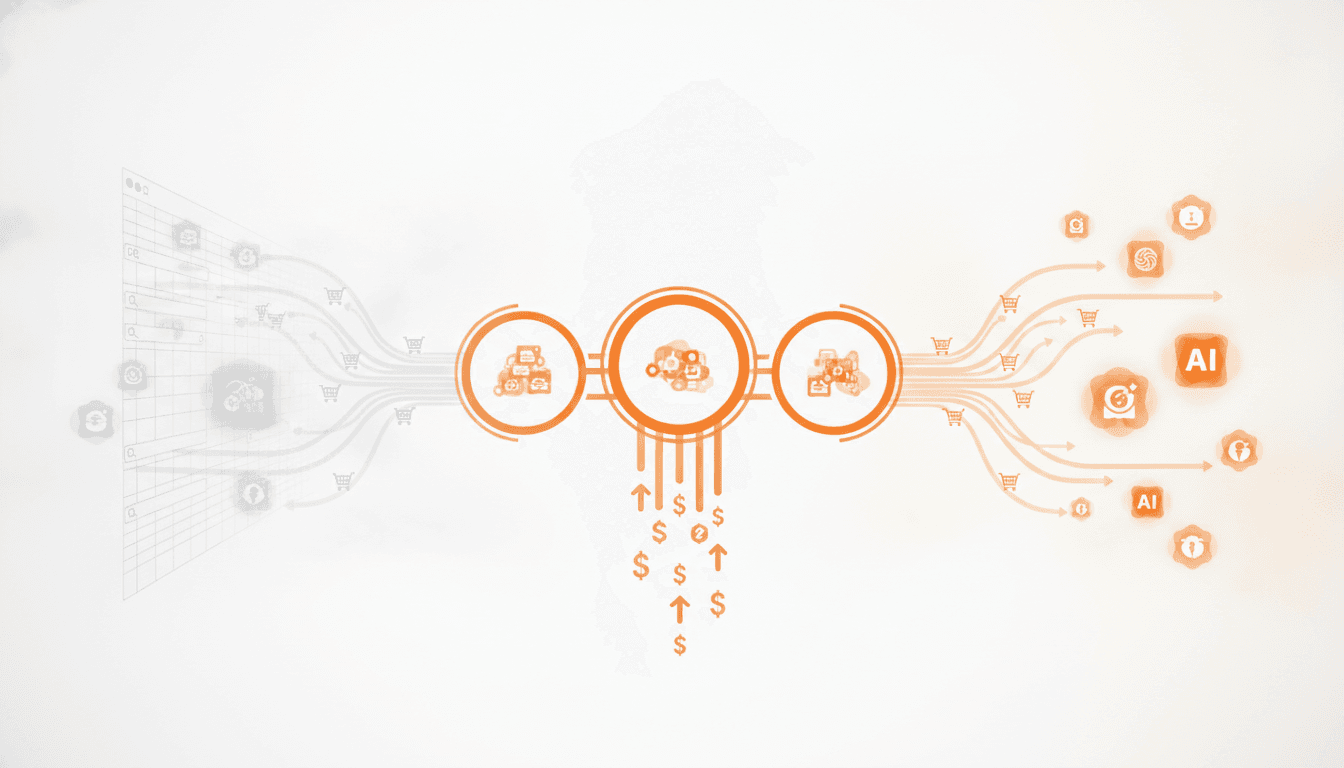
The customer journey is being restructured around AI intermediaries. Where consumers once typed queries into Google and scanned blue links, a growing segment now asks conversational questions and acts on AI-generated recommendations. With **31% of younger consumers reporting AI-influenced purchases**, the revenue implications of AI citation are already material—and will only accelerate.

Both SEO and GEO matter. They are different games requiring different strategies, different content approaches, and different success metrics. But brands that treat AI search as a secondary channel—something to address after optimizing for Google—are making a strategic bet against the direction of consumer behavior. AI search is not the future of brand discovery. For a significant and growing segment of high-intent consumers, it is already the present.


---


[IMG: Graph showing the growth curve of AI/voice search adoption from 27% in 2020 to 58.5% in 2024, with a projected continuation line, alongside a bar chart comparing AI referral traffic growth for GEO-optimized brands vs. traditional SEO-focused brands]


---


## The Bottom Line

The SEO playbook that built brand discovery over the last two decades operates on signals—backlinks, keyword density, Domain Authority—that large language models simply don't use. AI systems evaluate semantic comprehension, source trustworthiness, entity consistency, and editorial citation patterns. These are not variations of the same game. They are fundamentally different games entirely.

Generative Engine Optimization provides the framework for competing in the AI discovery channel. The four pillars—structured data, topical authority, entity consistency, and editorial citations—give brands a concrete, measurable path to AI visibility that backlink campaigns cannot replicate. The brands building these capabilities now are establishing a competitive advantage that will compound as AI search adoption continues to grow.

The window for early action is open, but it won't stay open forever. The brands that move first will own the AI discovery landscape the same way the early SEO adopters owned Google's first page.
H
Hexagon Team
Published May 29, 2026