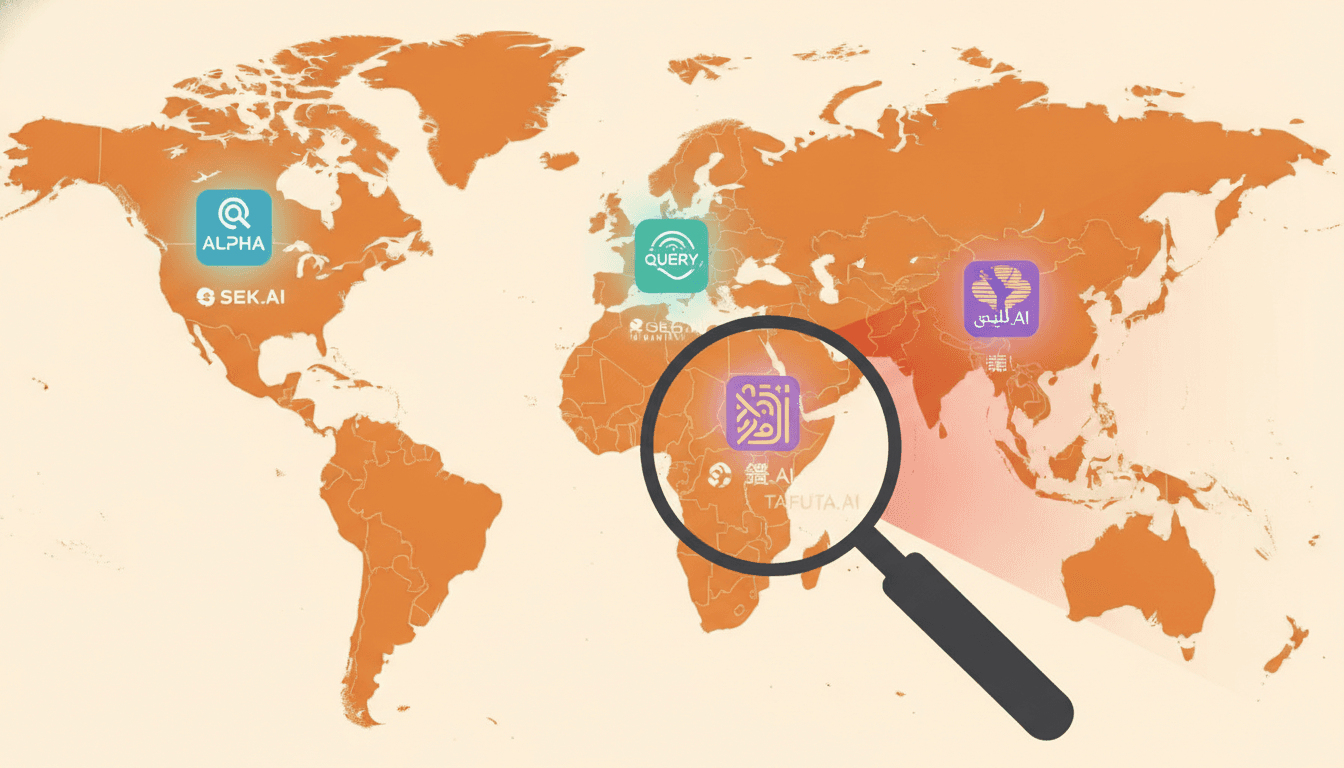
Global GEO: Navigating AI Search Differences Across International Markets
As AI-powered search engines transform how brands reach global audiences, regional differences in technology, language, and regulation are reshaping the rules of digital marketing. Discover how to tailor your AI search strategy for each market and unlock international growth.

Global GEO: Navigating AI Search Differences Across International Markets
As AI-powered search engines transform how brands connect with global audiences, regional variations in technology, language, and regulation are rewriting the rules of digital marketing. Learn how to tailor your AI search strategy for each market and unlock international growth opportunities.
[IMG: Global map highlighting dominant AI search engines by region]
AI-powered search engines are revolutionizing how consumers discover information, yet the experience varies dramatically across international markets. Brands face a complex reality: AI search behaves differently depending on linguistic nuances, local regulations, and dominant regional platforms. For any brand aiming to thrive globally, understanding these distinctions is essential. This comprehensive guide explores the global GEO landscape of AI search, revealing why AI marketing strategies must be customized for each region to truly unleash growth potential.
Ready to elevate your international AI marketing strategy with expert guidance? Book a free 30-minute consultation with Hexagon here.
Understanding Global GEO: What Makes AI Search Different Across Markets?
AI search is far from a one-size-fits-all technology. Each global GEO—a geographic or jurisdictional market—shapes how AI search engines function and how consumers engage with search results. For brands targeting international audiences, recognizing these differences is crucial to maximizing both reach and relevance.
Key ways AI search varies worldwide include:
-
Regional AI Search Engine Capabilities: While Google and Bing dominate markets like the US and Western Europe, local powerhouses such as Baidu in China and Yandex in Russia lead elsewhere. These engines differ in technical sophistication, data processing models, and integration with local services, resulting in distinct user experiences.
-
Language Support and Localization: Multilingual capabilities form the backbone of effective AI search. According to CSA Research, 54% of global consumers are more likely to trust AI-powered recommendations presented in their native language. This trust significantly boosts engagement and conversion rates for brands investing in local language optimization.
-
Cultural and Contextual Adaptation: As Sundar Pichai, CEO of Google, states, “Localization is not just about language—it’s about understanding context, culture, and compliance. AI search optimization must be geo-specific to succeed globally.” This means brands must tailor not only language but also messaging and content structure to align with local customs and expectations.
-
Technical Infrastructure: Access to high-speed internet, mobile devices, and AI technologies varies widely. Emerging markets often leapfrog traditional desktop search, adopting mobile and voice-first interfaces as their primary search modes.
-
Regulatory Environment: Local laws influence how AI search engines collect, store, and process user data. These regulations profoundly impact AI search strategies, a topic explored in detail in the next section.
Looking ahead, brands that treat each GEO as a unique ecosystem—rather than simply translating campaigns—will be best positioned to harness AI search for sustainable growth.
[IMG: Illustration showing different AI search interfaces—desktop, mobile, voice—in various languages]
Local Regulations: The Legal Landscape Shaping AI Search Worldwide
The legal frameworks governing AI and data privacy are increasingly diverse and complex. Regional regulations dictate how AI search engines operate, affecting everything from data processing to content availability.
Here’s how regulations influence AI search across key markets:
-
GDPR in Europe: The General Data Protection Regulation (GDPR) enforces stringent standards on user data collection, storage, and consent. European AI search engines must anonymize query data, honor deletion requests, and restrict cross-border data transfers. According to Statista, 42% of European marketers cite GDPR compliance as a top challenge in AI search optimization.
-
Data Residency Laws in China and Russia: China requires all user data generated within its borders to be stored locally, with AI search engines like Baidu and Alibaba’s Tongyi Qianwen trained primarily on Chinese language data while adhering to strict censorship rules (Reuters). Russia similarly mandates domestic data storage and content filtering (Carnegie Endowment for International Peace).
-
Opportunities and Challenges: These legal frameworks present both obstacles and strategic opportunities. Brands investing early in compliance can build consumer trust and mitigate risks. Conversely, failing to localize data or respect content restrictions can lead to blocked campaigns or substantial fines.
-
Cross-Border Data Flows: International brands must develop robust systems to manage data sovereignty, often maintaining separate technical architectures tailored to each regulated market.
For instance, AI search results in the US and UK are heavily shaped by commercial partnerships and advertising algorithms, whereas in China and Russia, state regulations play a more dominant role. As Fei-Fei Li, Co-Director of Stanford HAI, observes, “The future of AI-driven search depends on our ability to adapt models to local user behavior and regulatory landscapes.”
[IMG: Visual comparison of data privacy regulations by region]
Voice and Vernacular Search: The Rising Trend in Emerging Markets
The widespread adoption of mobile internet and affordable smartphones has sparked a voice search revolution in emerging markets. Consumers in India, Southeast Asia, and Africa increasingly prefer speaking their queries, often in local languages and dialects.
This shift is reshaping AI search in several ways:
-
Explosive Growth in Voice Search: In India alone, 58% of AI search queries are conducted via voice assistants in local languages (Google India). This marks a dramatic departure from earlier text-based, English-centric search habits.
-
Importance of Vernacular Support: Over 70% of new Indian internet users favor regional languages (KPMG/Google Report). AI search engines capable of understanding and processing multiple Indian languages are thus positioned to capture billions of new users.
-
Behavioral and Cultural Factors: Local users often phrase voice queries using colloquial expressions, idioms, or region-specific references. Prabhakar Raghavan, SVP of Google Search, notes, “In emerging markets, AI search adoption will be driven by voice and vernacular capabilities, not just English-centric models.”
-
Technical Challenges: Supporting dozens of languages and dialects demands extensive natural language processing (NLP) training, including region-specific data and pronunciation models.
-
Brand Implications: Companies optimizing content for voice and local languages stand out in competitive markets. This may involve creating localized FAQs, voice-ready snippets, and accommodating non-standard query formats.
Looking forward, brands investing in vernacular and voice optimization will forge lasting connections with diverse, fast-growing user bases.
[IMG: Smartphone with voice assistant and regional language options]
Local AI Search Engines vs. Global Giants: Who Leads and Why?
Although Google and Microsoft Bing dominate globally, local search engines frequently outperform them in key international markets. These regional champions excel by adapting to local language, culture, and regulatory demands.
Key market leaders include:
-
Baidu (China): Primarily trained on Chinese data and operating within a unique regulatory and linguistic environment, Baidu delivers AI-powered results tailored to local user expectations and content regulations (Kai-Fu Lee, Sinovation Ventures). Alibaba’s Tongyi Qianwen is also rapidly advancing in China’s AI search space.
-
Yandex (Russia): Holding a commanding 72% share of the Russian search market (StatCounter), Yandex excels at understanding the Russian language and domestic content indexing while complying with strict data residency and censorship laws.
-
Naver and LINE (Korea and Japan): In Japan, 88% of internet users regularly use Naver or LINE for local information searches, compared to just 9% for Google (eMarketer). These platforms are finely tuned to Japanese and Korean language structures, local trends, and domestic content sources (TechCrunch).
Local engines outperform global competitors by:
-
Cultural and Linguistic Adaptation: They invest heavily in NLP tailored to native languages, recognize regional idioms, and prioritize domestic content—areas where global models often lag.
-
Regulatory Compliance: Being aligned with state regulations allows them to navigate complex legal requirements, from content censorship to data residency.
-
Brand Visibility: For international brands, visibility on Baidu, Yandex, or Naver can outweigh Google presence in these markets. Success requires customized SEO strategies, including local link-building, content partnerships, and platform-specific ad formats.
Consequently, global brands must craft AI search marketing strategies that address each dominant local player. Relying solely on Google or Bing risks missing significant market share and revenue.
[IMG: Pie charts showing search market share distribution in China, Russia, Japan, and Korea]
Crafting an International GEO Strategy for AI Optimization
Building an effective international GEO strategy involves more than translation—it demands a comprehensive approach balancing localized content, technical SEO, and brand consistency.
Here’s how to navigate this complexity:
Localized Content Creation
-
Language and Cultural Relevance: Develop content in native languages, incorporating local idioms, references, and relatable examples. Localization should ensure both linguistic precision and cultural resonance.
-
User Intent Mapping: Research how local audiences phrase search queries—the topics, keywords, and content formats they prefer. For example, Japanese product searches may emphasize quality and reliability, while Indian users often focus on price comparisons and local availability.
-
Content Types and Formats: In regions dominated by mobile and voice search, video, audio, and interactive formats may outperform long-form text.
Technical SEO for AI Search Engines
-
Schema Markup and Structured Data: Apply region-specific schema to help AI search engines accurately interpret and display your content.
-
Multilingual Site Architecture: Utilize hreflang tags, language-specific URLs, and geo-targeted sitemaps to signal relevance to users and search engines.
-
Performance Optimization: Prioritize fast page load times and mobile responsiveness; slow or poorly optimized sites are penalized, especially in mobile-first markets.
-
Local AI Engine Requirements: Adapt to the unique guidelines of Baidu, Yandex, Naver, and others, which can differ significantly from Google’s standards.
Balancing Global Brand Consistency with Local Customization
-
Brand Messaging: Preserve core global values and voice while adapting tone, imagery, and calls to action to local preferences.
-
Compliance and Privacy: Follow local regulations (GDPR, data localization, content restrictions) without compromising user experience or trust.
-
Continuous Testing and Localization: Employ A/B testing and gather local user feedback to refine content and technical setups for each market.
Looking forward, a robust international GEO strategy is an ongoing commitment—requiring frequent updates, vigilant compliance monitoring, and deep cultural engagement.
[IMG: Workflow diagram illustrating steps in international AI search optimization]
Cultural Nuances and Local Search Habits: Impact on AI Query Interpretation
AI search engines must grasp more than just language—they must decode the cultural context behind each query. User intent, phrasing, and information needs are deeply influenced by local customs, social norms, and humor.
Cultural nuances affect AI search in these ways:
-
Query Formulation: For example, US users might search “best running shoes 2024,” whereas Japanese users may look for “recommended running shoes for rainy season.” Recognizing these differences allows AI to deliver highly relevant results.
-
Intent Interpretation: Some cultures favor direct queries (“cheapest flights to Paris”), while others use indirect or exploratory language (“how to plan a budget trip to France”). AI models trained on local data better understand these subtleties.
-
Content Trust and Preferences: According to McKinsey & Company, trust in AI-generated content varies globally. Local endorsements, user reviews, and familiar influencers often boost credibility in specific regions.
-
Cultural Events and Trends: Search interest spikes around local holidays, festivals, or news events. AI-driven content calendars aligned with these cycles can significantly increase engagement.
To leverage cultural insights effectively, brands should:
- Collaborate with local experts and agencies
- Train AI models on region-specific datasets
- Update content to reflect seasonal and cultural events
Integrating cultural awareness into content creation and AI model training dramatically enhances marketing impact across GEOs.
[IMG: Side-by-side examples of AI search queries from different cultures]
Navigating Fragmented Global AI Search Market Share: Market-Specific Tactics
The global AI search market is fragmented, with multiple dominant engines and varying user preferences. One-size-fits-all approaches rarely succeed.
Tailor your tactics by market:
-
Identify Key Search Engines Per GEO: Google may dominate the US, but Yandex rules Russia; Naver and LINE are essential in Korea and Japan. Understanding local market shares is key to prioritizing channels.
-
Platform-Specific SEO and SEM: Each engine has unique ranking signals, ad formats, and algorithmic nuances. For example, Baidu and Yandex emphasize local backlinks and compliance with regional content policies.
-
Localized Engagement Strategies: Connect with audiences on their terms—leveraging popular local platforms, influencers, and culturally relevant campaigns.
-
Metrics and KPIs: Monitor market-specific indicators such as:
- Local search engine rankings
- Voice and vernacular query shares
- Conversion rates by language and platform
- Compliance and data residency adherence
-
Continuous Optimization: Stay agile as technology, regulations, and consumer behaviors evolve rapidly.
Brands embracing data-driven, market-specific approaches consistently outperform competitors relying on generic tactics.
[IMG: Bar graph comparing search engine market share in major international GEOs]
Overcoming Data Localization and Content Restrictions in Cross-Border AI Marketing
Data localization laws and content restrictions complicate cross-border AI marketing efforts. Successfully navigating these challenges is vital to maintain performance and compliance.
Approach these hurdles by:
-
Data Localization: Many countries require user data to be stored and processed domestically. This often means investing in local data centers or approved cloud providers. Markets like Russia and Turkey enforce strict local storage mandates (Carnegie Endowment for International Peace).
-
Content Censorship: In China, AI search engines must filter results per government guidelines. Brands need to audit content carefully to comply and avoid restricted topics.
-
Technical Solutions: Deploy region-specific site versions and separate data pipelines to isolate regulated datasets. Use geo-fencing technologies to prevent data and content from crossing restricted borders.
-
Success Stories: Some global brands have built localized content hubs and partnered with local agencies to successfully navigate regulatory complexities. Others leverage cloud platforms with compliance certifications for data residency.
-
Balancing Reach with Risk: While compliance may limit some marketing tactics, adapting to legal requirements fosters consumer trust and long-term brand equity.
By proactively addressing localization and censorship mandates, brands can unlock new markets while minimizing regulatory risks.
[IMG: Flowchart of data localization and content approval process]
Conclusion: Mastering Global GEO for Future-Proof AI Marketing
Global AI search is an ever-evolving landscape shaped by regional languages, regulations, user behaviors, and technology platforms. Brands that understand and embrace these differences will lead in the next phase of digital marketing.
To future-proof your international AI marketing strategy:
- Prioritize Localization: Move beyond translation—adapt content, user experience, and AI models to each market’s unique context.
- Stay Compliant: Continuously monitor and respond to changing data privacy and localization laws across GEOs.
- Leverage Cultural Insight: Train AI systems and teams to grasp local search habits, cultural events, and intent signals.
As Sundar Pichai emphasizes, “AI search optimization must be geo-specific to succeed globally.” The path for brands is clear: adopt a strategic, market-specific GEO approach to unlock sustainable growth and outpace competitors.
Ready to master global GEO and elevate your AI marketing? Book a free 30-minute consultation with Hexagon here.
[IMG: Diverse group of marketers collaborating over a world map with AI icons]
Hexagon Team
Published February 11, 2026