Why Traditional SEO Falls Short in the Age of AI Search and GEO
As AI-powered search engines disrupt how consumers discover brands, traditional SEO tactics are swiftly losing their effectiveness. Learn why Generative Engine Optimization (GEO) is the new imperative for future-proofing your marketing and how to pivot your strategies for AI-driven discoverability.
Why Traditional SEO Falls Short in the Age of AI Search and GEO
As AI-powered search engines revolutionize how consumers discover brands, traditional SEO tactics are rapidly losing their effectiveness. Discover why Generative Engine Optimization (GEO) is essential to future-proof your marketing efforts—and how to adapt your strategies for AI-driven discoverability.
The landscape of search is undergoing a seismic shift. AI-powered search engines are transforming the way users find information and shop online, rendering many traditional SEO tactics—like keyword stuffing and backlinking—less effective than ever before. For e-commerce brands and digital marketers, understanding why these once-reliable strategies are becoming obsolete and how Generative Engine Optimization (GEO) provides a powerful alternative is crucial to maintaining visibility and competitiveness in today’s dynamic search environment.
[IMG: Modern digital marketer looking at AI-generated search results on a laptop]
The Decline of Traditional SEO in an AI-Driven World
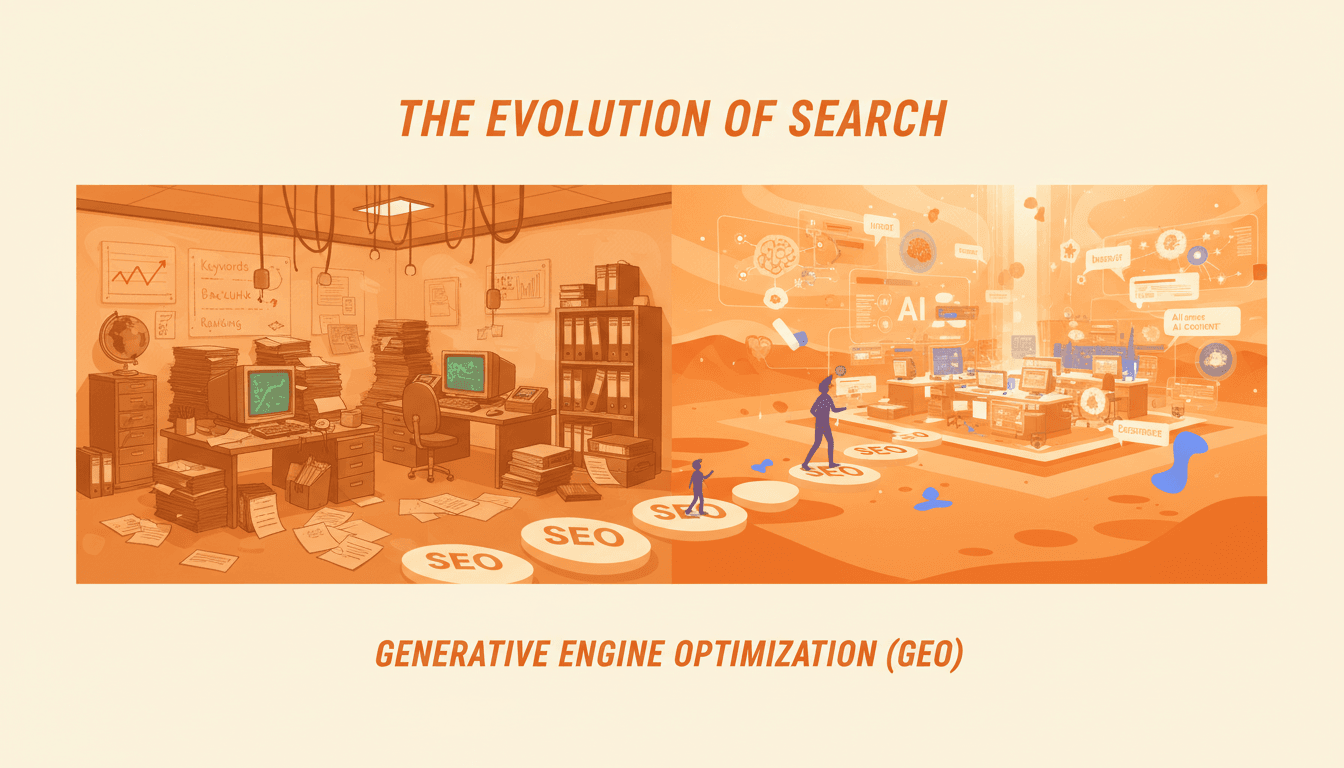
For more than two decades, traditional SEO has centered on optimizing keywords, building backlinks, and adhering to ranking factors crafted by human-curated algorithms. These methods successfully drove traffic and brand visibility during the era dominated by the classic “ten blue links.” Yet, the rapid emergence of AI search engines is rewriting these rules faster than ever before.
Today’s AI-powered engines interpret content through the lens of user intent and contextual understanding, moving beyond mere keyword matching. Gartner reports that 68% of AI search engine results now feature synthesized answers instead of traditional ranked links (Gartner, 2024). This fundamental shift means users increasingly receive direct, concise responses rather than a list of website links.
- Traditional SEO Tactics Include:
- Keyword optimization and density management
- Backlink acquisition from authoritative sources
- On-page and technical SEO health
What does this mean for brands? E-commerce sites that haven’t embraced GEO have experienced an average 55% decline in organic search traffic since 2023 (BrightEdge, 2024). As AI models synthesize information from diverse sources, they deprioritize legacy signals like backlinks and keyword density, favoring sites that provide structured, trustworthy, and context-rich data.
The urgency to adapt is unmistakable. As Lily Ray, Senior Director of SEO at Amsive Digital, explains, “AI search is fundamentally changing how brands are discovered online. Optimizing for keywords alone is no longer sufficient; brands must structure their data and content to be AI-understandable.”
Consider an e-commerce store that once dominated search rankings through optimized product pages. Now, AI-generated shopping guides aggregate and summarize competing products, often bypassing individual sites altogether. The consequence? Diminished visibility and lost revenue for brands relying solely on traditional SEO.
Understanding the Key Differences Between SEO and GEO
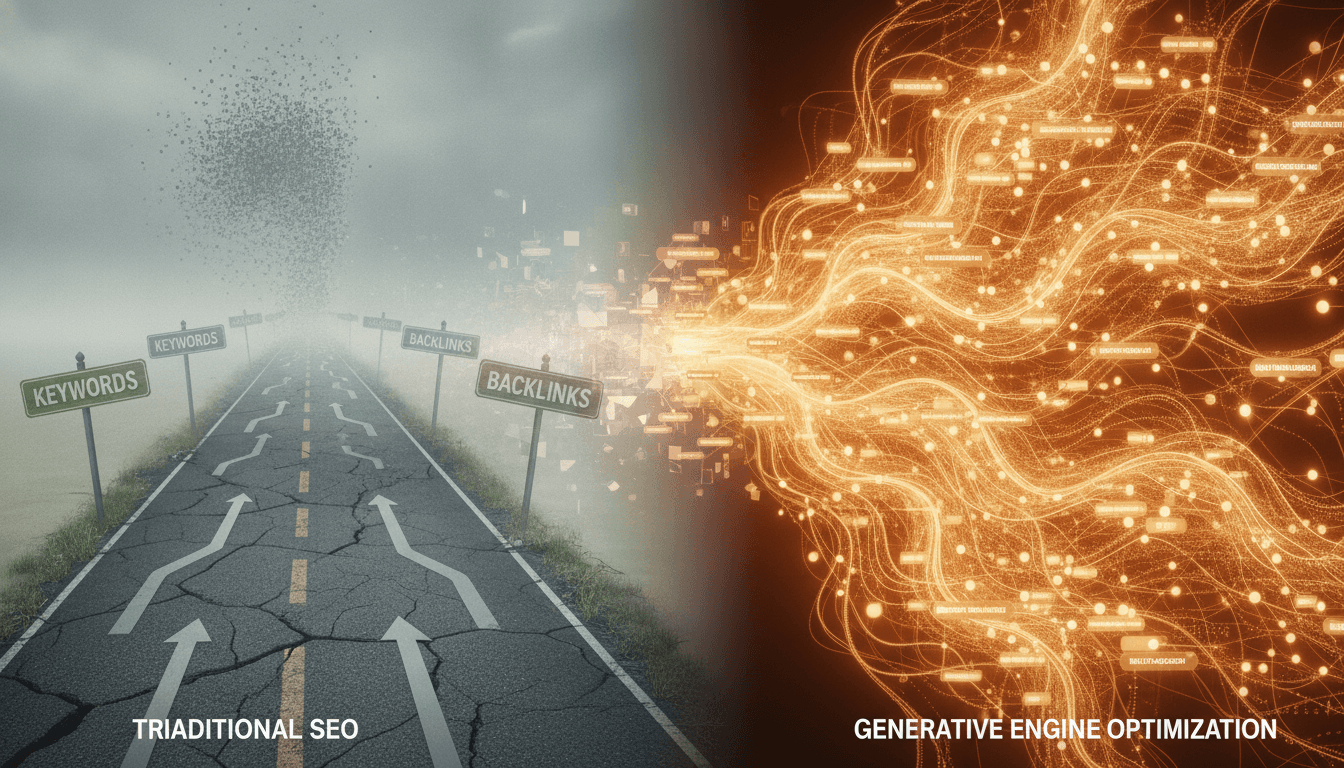
Generative Engine Optimization (GEO) represents a pivotal evolution in search marketing. While traditional SEO focuses on improving rankings within index-based search engines, GEO is tailored for an era where AI models generate answers and recommendations from structured, conversational data.
-
Traditional SEO:
- Centers on keyword matching, backlinks, and technical site health
- Aims to secure higher placement in linear lists of search results
- Optimizes content primarily for human readers and basic crawlers
-
Generative Engine Optimization (GEO):
- Ensures brand data is machine-readable and easily accessible to AI models
- Emphasizes structured data, knowledge graphs, and real-time product feeds
- Designs content optimized for conversational, intent-driven interactions
In practice, GEO-optimized brands are 3.2x more likely to be recommended by AI shopping assistants (Forrester, 2024). This advantage stems from providing clear, consistent, and easily digestible brand information that AI can quickly process.
- Core Components of GEO:
- Advanced schema markup and structured data standards (e.g., Schema.org)
- Comprehensive knowledge graph entries that reinforce brand authority
- Automated product feeds updating availability, pricing, and specifications in real time
Unlike traditional SEO, AI search engines prioritize:
- Content that demonstrates expertise, authoritativeness, and trustworthiness (E-E-A-T)
- Machine-readable information that can be synthesized and verified across sources
- Queries driven by intent and conversational language
Ahrefs highlights that 62% of user queries to AI search engines are now intent-based and conversational (Ahrefs, 2024). Rand Fishkin, Co-founder of SparkToro, emphasizes: “The rise of generative AI means search is shifting from keyword matching to satisfying user intent. GEO is the natural evolution for digital marketers.”
As AI surfaces direct answers and personalized recommendations, traditional SEO’s focus on ranking signals alone is becoming less relevant. For brands, adopting GEO is not just a tactical tweak—it’s a strategic imperative to maintain discoverability in the AI search era.
[IMG: Diagram comparing traditional SEO and GEO workflows]
Why AI Search Engines Favor Context, Intent, and Authority Over Keywords
AI search engines have moved beyond treating keywords as their primary guide. Instead, they leverage natural language processing to analyze context and understand user intent, creating a search experience that is increasingly conversational and recommendation-driven.
Here’s how AI search fundamentally differs:
- Synthesizes information from multiple sources, not solely from top-ranking pages
- Interprets questions and context to directly fulfill user intent
- Prioritizes content that exhibits authority, clarity, and trustworthiness
Danny Sullivan, Public Liaison for Search at Google, sums up the shift: “If your brand doesn’t provide structured, high-quality information to AI engines, you risk fading from the new recommendation layers of search.”
Supporting this view, the Search Engine Journal reports that 74% of SEO managers feel current tools inadequately address AI search rankings. This highlights a critical gap—traditional SEO tools were not designed to optimize for AI’s contextual, conversational, and synthesis-based approach.
- AI Search Prioritizes:
- Structured, authoritative content over keyword-heavy pages
- Sources enriched with schema markup and knowledge graph integration
- Brands that proactively answer conversational, intent-driven queries
Looking forward, brands that resist adapting risk losing relevance as AI engines increasingly reward those providing rich, trustworthy, and accessible information.
[IMG: AI search interface displaying direct answers above website links]
How Brands Should Pivot Their Strategies for AI Search Success
Transitioning from traditional SEO to GEO is no longer optional; it’s essential for brands aiming to thrive in the AI search landscape. Here’s how forward-thinking organizations are making the shift:
-
Enhance Structured Data and Knowledge Graphs:
- Integrate comprehensive schema markup across all web pages
- Supply accurate, real-time product data to AI models
- Develop robust brand knowledge graphs to solidify authority
-
Create Conversational, Intent-Driven Content:
- Produce FAQs and product guides tailored to natural language queries
- Optimize content for user scenarios, not just isolated keywords
- Provide clear, consistent answers that AI can easily synthesize and recommend
-
Adopt GEO-Specific Tools and Monitoring:
- Utilize platforms that track AI search visibility and conversational rankings
- Regularly audit and improve knowledge graph presence
- Measure performance in AI assistant recommendations, beyond traditional organic links
For instance, a leading fashion retailer saw a 3x increase in AI assistant-driven traffic after implementing GEO strategies. By enriching their product feed, adding detailed schema markup, and crafting conversational shopping guides, they secured top spots in AI-generated buying recommendations.
- Successful GEO Implementation Includes:
- Frequent updates to structured data and product feeds
- Content audits focused on intent alignment and conversational tone
- Strategic partnerships to expand authoritative data sources
Brands embracing GEO report significantly higher e-commerce traffic and AI assistant recommendations. As Aleyda Solis, International SEO Consultant, states, “Traditional SEO tools weren’t built for the generative search era. GEO is about making your brand’s data accessible, verifiable, and AI-friendly.”
Ready to future-proof your search strategy with GEO?
Book a free 30-minute consultation with Hexagon today to learn how to optimize your brand for AI-driven discoverability:
https://calendly.com/ramon-joinhexagon/30min
[IMG: Team collaborating over a digital dashboard monitoring GEO performance]
Practical Steps to Transition from Traditional SEO to GEO
Adapting to GEO doesn’t require starting from scratch but does demand a strategic audit and focused enhancements. Here’s a clear roadmap for brands ready to make the transition:
-
Audit Existing SEO Efforts:
- Identify gaps in structured data, schema markup, and knowledge graph integration
- Review content for alignment with user intent and conversational style
-
Integrate and Enhance Structured Data:
- Implement schema markup for products, FAQs, and organizational details
- Establish and maintain knowledge graph presence across platforms like Google, Bing, and Amazon
-
Develop Conversational, Intent-Focused Content:
- Rewrite key pages to directly address common user questions and scenarios
- Anticipate how customers interact with AI assistants and tailor content accordingly
-
Leverage GEO-Specific Analytics:
- Track brand mentions, AI assistant recommendations, and direct answer placements
- Use specialized tools designed for monitoring performance in generative search environments
Brands that systematically apply these steps will not only maintain but expand their discoverability as AI-powered search continues to evolve.
The Future of Search Marketing: Embracing GEO to Stay Ahead
Traditional SEO laid the foundation for digital discoverability, but in the generative search era, it’s no longer enough. As AI-driven engines evolve, GEO is becoming the essential playbook for future-proof marketing. Brands that master the art of structured, conversational, and intent-aligned content will lead in AI-powered discoverability.
Hexagon empowers brands with advanced GEO strategies, helping them capture new audiences and stay ahead of the competition as the search landscape transforms. Ready to future-proof your search strategy with GEO?
Book a free 30-minute consultation with Hexagon today:
https://calendly.com/ramon-joinhexagon/30min
[IMG: Futuristic cityscape symbolizing the future of AI-driven search marketing]
Hexagon Team
Published April 16, 2026